1
Meter first, heating second
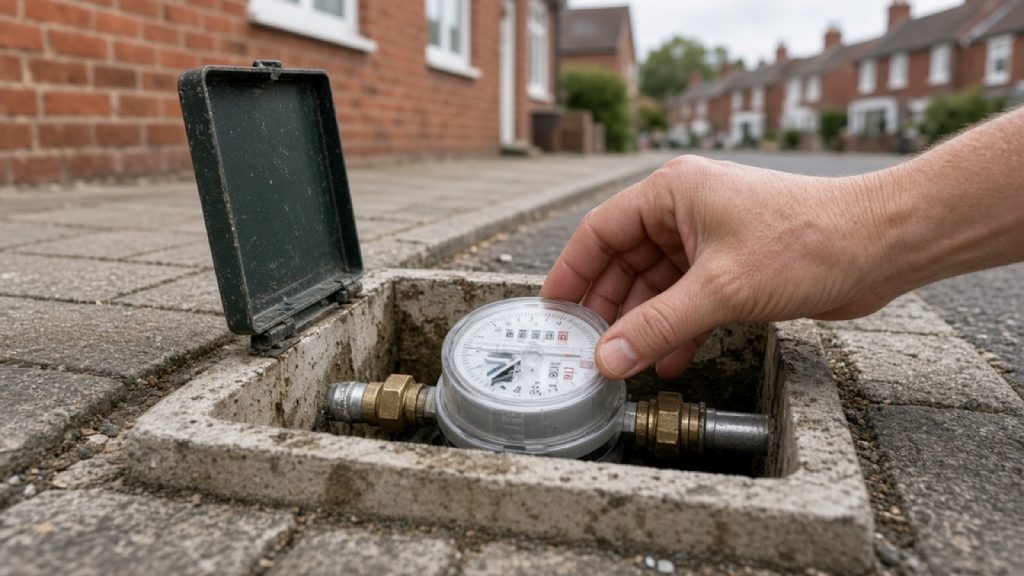
With every tap and appliance off, a meter that keeps turning points at the supply pipe. If it stands still, a pressure test on the heating settles it.

Leak detection in Flitwick
Most of Flitwick was built after the railway made it a commuting town, so the leaks Charlie finds here are heating pipes in concrete floors and supply pipes under driveways. He traces both without digging.
No find, no fee
Visit in 24 to 48 hours
Floors and drives left intact
Insurer ready written report
Tell us what you have noticed and where. We ring you back to talk it through. No find, no fee.
No find, no fee
24/7 enquiries
Non-invasive methods
Reports for insurance claims
Flitwick grew from a village into a town in a few decades, and almost all of that growth came in estates on solid concrete floors with the heating pipes cast into the screed. When a joint in that screed fails, the water goes down into the floor, not up into the room, and nothing looks wet.
Out in Steppingley, Maulden and Westoning, village houses often sit at the end of a long private supply pipe from the meter at the road. A split in that pipe can run for months with only a higher bill to show for it. Flitwick leak detection is the same job in both cases: prove which system is losing water, then mark the exact spot.
1
With every tap and appliance off, a meter that keeps turning points at the supply pipe. If it stands still, a pressure test on the heating settles it.
2
The thermal camera is run across every floor and the lower walls. It shows the route the pipes take and any point where heat is spreading sideways.
3
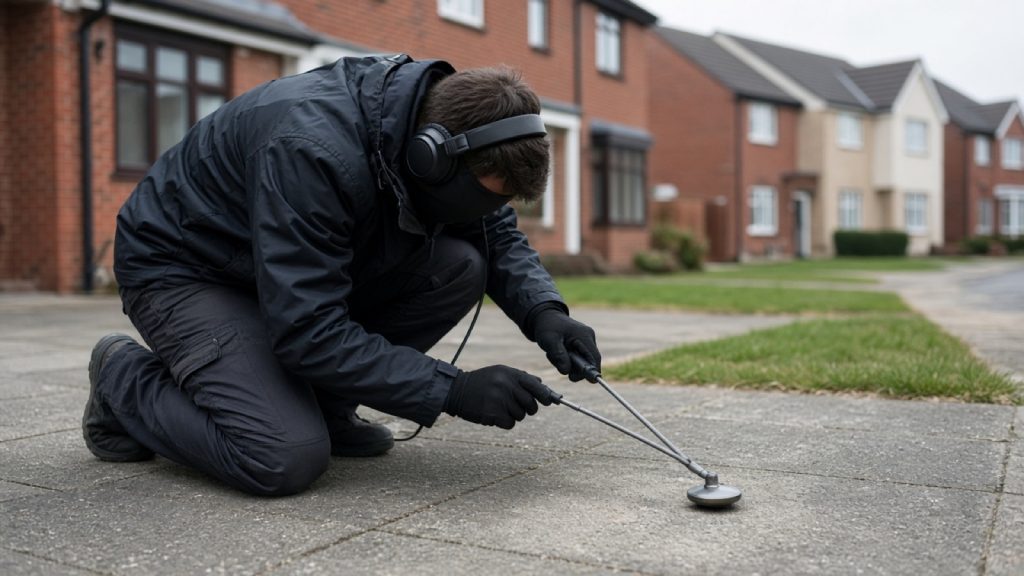
On a supply pipe, the ground microphone finds the loudest point along the run. On a heating circuit, tracer gas does the same job through the screed. Then the spot is marked and photographed.
Heating pipes in a screed warm a strip of floor above them. Where a leak is pushing hot water into the concrete, that strip blooms into a patch, and the camera shows its centre.
A leaking supply pipe under a Flitwick drive sends a steady noise up through the ground. We listen along the run with a ground microphone and the loudest reading marks the break.
Where there is no sound and no heat to read, the drained pipe is filled with a hydrogen based tracer gas. It escapes at the fault and a probe finds it rising through the floor.
A 1980s house on one of the estates was losing a bar of pressure a week and nothing looked wet. With the heating hot, the thermal camera showed a warm fan spreading under the hall screed, and tracer gas confirmed a pinhole at a joint by the front door. Out in Steppingley a cottage on a long private supply had a water company letter; the ground microphone along the lane side found a split in the old pipe close to the stop tap. In a semi near the station a brown stain on the kitchen ceiling was traced, by running each fixture in turn, to the bath waste letting go only when the bath was emptied.
Toddington is a few minutes down the A5120, Bedford and Kempston are a short run north, and Houghton Regis and Leighton Buzzard sit to the south and west. Flitwick is in the middle of our leak detection Bedfordshire patch, so it pairs with any of them.
Trace and access is the part of a buildings policy that covers finding a hidden leak and the making good afterwards. The insurer wants evidence that the leak was located properly rather than guessed at, so our report sets out each test, the result, the thermal images and the marked location.
Call 07897 020 680 and say where in Flitwick you are.
Landline 01440 840 772. Email hello@completeleakdetection.co.uk.