A damp patch that keeps coming back
You dry it out, repaint, and it returns. The camera shows the shape of the wet area behind the surface, which usually points straight at the pipe or joint feeding it.

Thermal imaging leak detection
A thermal camera sees the temperature difference that a leak leaves in a wall or floor. Charlie uses it to narrow a damp problem down to a pipe run in minutes, without drilling or lifting tiles.
No find, no fee
No drilling to look
Images in your report
Usually booked within 24 to 48 hours
Tell us what you have noticed and where. We ring you back to talk it through. No find, no fee.
No find, no fee
24/7 enquiries
Non-invasive methods
Reports for insurance claims
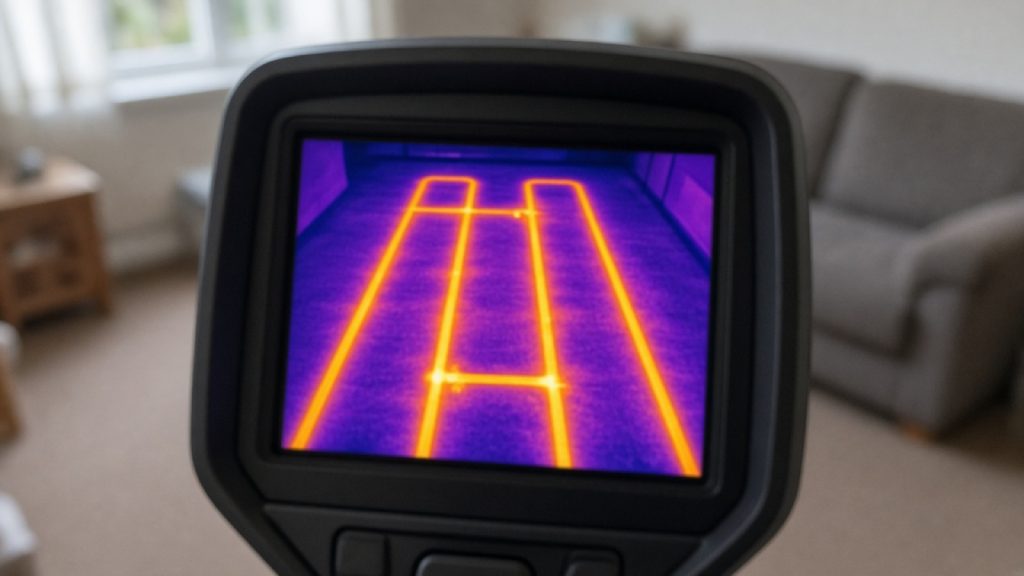
Thermal imaging does not see water. It sees temperature. A hot water or heating pipe leaking under a floor warms the screed above it. A cold feed leaking behind plaster cools the surface as the water evaporates. The camera picks up differences of a fraction of a degree and shows them as a picture.
That makes thermal leak detection the quickest way to answer the first question on most jobs: where is the water actually coming from? A ceiling stain can be a long way from the leak. The camera follows the warm or cool trail back along the pipe to the point it starts.
Charlie uses the camera on nearly every visit, then confirms what it shows with a moisture meter, acoustic listening or tracer gas before anything is marked. The thermal images go in your written report so you and your insurer can see what was found.
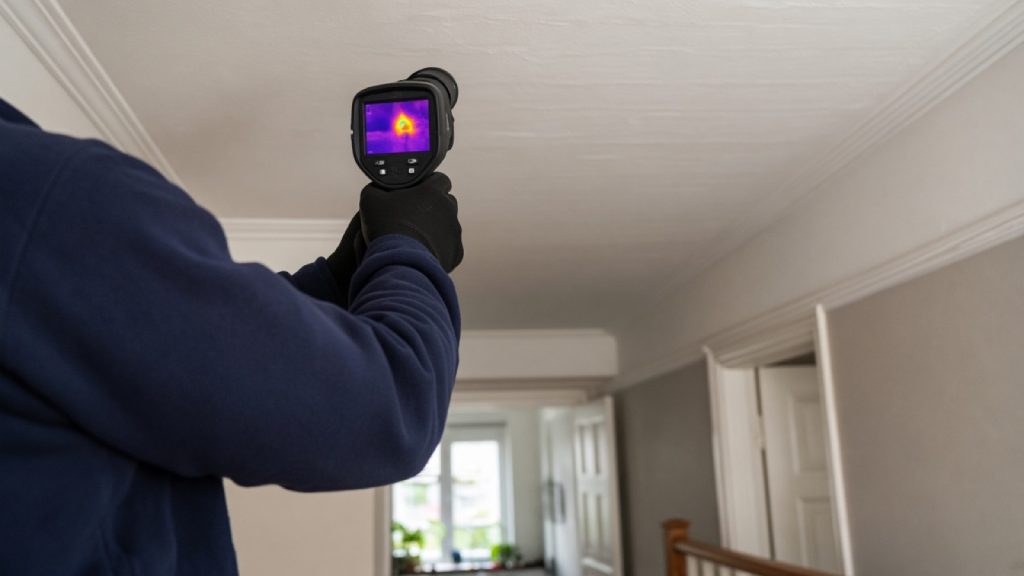
You dry it out, repaint, and it returns. The camera shows the shape of the wet area behind the surface, which usually points straight at the pipe or joint feeding it.
One patch of tile or laminate is warmer than the rest and you have not got underfloor heating there. That is a classic hot pipe leak under the screed.
If the system loses pressure and no radiator is wet, the water is going into the floor or a wall. With the heating on, the leak shows as a bright patch on the camera.
Moisture behind a wall or under a bath shows as a cooler area on the thermal image, even when the surface looks and feels dry to the hand.
1
For a heating leak Charlie runs the boiler so the pipes are hot. For a cold feed he may run water through it. The bigger the temperature difference, the clearer the image, so this stage is not skipped.
2
The camera goes over every surface in the affected area and the rooms around it. Pipe runs appear as lines. A leak appears as a blob or a fan shape spreading out from the pipe.
3
A warm patch can also be a hot pipe sitting close to the surface. Charlie checks the suspect area with a moisture meter, and where needed with acoustic listening or tracer gas, before marking anything.
4
The leak point is marked on the surface. Your report includes the thermal images alongside normal photos so the location is clear to a builder, a plumber or an insurer.
An infrared camera that shows surface temperature as a colour image. It is used to find the extent of a wet area and trace it back along a pipe, and it covers a whole room in a few minutes.
A hand held meter that reads how wet the plaster, timber or screed is at a given point. It turns the picture from the camera into a number, and separates a real leak from a pipe that is simply warm.
Used after the camera when the leak is on a pressurised pipe. The camera says which wall or floor. Listening says which point on the pipe, so the opening up is one spot.
For leaks the camera cannot show, such as a cold pipe under a thick slab, we fill the pipe with a hydrogen and nitrogen mix and read where it surfaces. It is the backup when temperature alone is not enough.
In a King's Lynn bungalow a warm patch on the hall floor had puzzled the owner. With the heating on, the camera showed the pipe route under the screed and a bright blob where a joint had failed, confirmed with a moisture meter before marking. In a new house near Ely the underfloor heating was losing pressure; the camera showed one loop running cooler than the rest and a warm spread at the edge of the kitchen island, where a screw had gone through the pipe. In a Bury St Edmunds terrace a damp patch on a bedroom wall turned out to be a cold feed behind the plaster, showing as a cool stripe long before the paper lifted.
Thermal imaging leak detection from our Suffolk base across Suffolk, Norfolk, Cambridgeshire, Essex, Hertfordshire, Bedfordshire, Buckinghamshire and Greater London. Thermal imaging leak detection London enquiries come to us from the north and east of the city.
Short, practical reads written for the problem you have in front of you.
A thermal image is useful evidence for a trace and access claim because it shows the extent of the water damage as well as the point it came from. Our written report pairs each thermal image with a normal photograph of the same spot, gives the moisture readings, and states the method used to confirm the leak, so the insurer can follow the reasoning.
Call 07897 020 680, any time, and we can usually book a thermal imaging survey within 24 to 48 hours with no find, no fee.
Landline 01440 840 772. Email hello@completeleakdetection.co.uk.