A smell of gas that comes and goes
Mains gas has a sulphur smell added to it. A faint smell near a floor, a cupboard or an outside wall that is there some days and not others points to a small leak on a buried or concealed pipe.

Gas leak detection and repair
If you can smell gas now, turn it off at the meter, open the windows and call the National Gas Emergency Service on 0800 111 999 first. When the supply is safe and the leak still needs finding, call Charlie.
Pinpoints the leak on the pipe
Buried and under floor runs
24/7 enquiries
Usually booked within 24 to 48 hours
Tell us what you have noticed and where. We ring you back to talk it through. No find, no fee.
No find, no fee
24/7 enquiries
Non-invasive methods
Reports for insurance claims
A gas leak is usually found in two stages. The emergency service makes the property safe, often by isolating the supply at the meter. That leaves you without gas and with a leak somewhere on your own pipework that still has to be located before anyone can put it right.
That second stage is the gas leak detection service we provide. The pipe is isolated and filled with a tracer gas mix, and a detector follows the pipe run to the point where the gas escapes. It works on pipes under concrete floors, in walls and on long buried runs to an outbuilding, without opening everything up.
Once the leak is pinpointed and marked, Charlie explains what has failed and what the repair involves, so the pipe is opened at one spot instead of along the whole run. Homes, rented property and commercial premises are all covered, and enquiries are taken 24 hours a day.
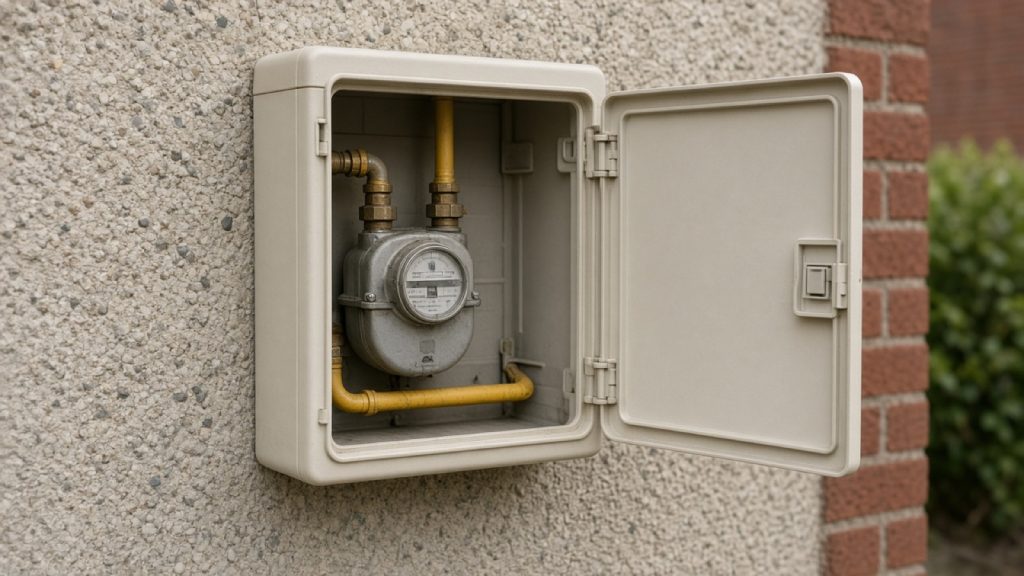
Mains gas has a sulphur smell added to it. A faint smell near a floor, a cupboard or an outside wall that is there some days and not others points to a small leak on a buried or concealed pipe.
An engineer has tested the installation and it does not hold pressure, but there is no obvious leak at any appliance or visible joint. The leak is somewhere in the pipework in between.
A yellowed or dead strip across a lawn, between the meter box and the house or out to a garage, can sit over a leaking buried gas pipe.
A faint hiss from behind a boiler, a kitchen kickboard or a meter cupboard when everything is off is gas escaping under pressure. Treat it as an emergency first.
1
Charlie checks the supply is off at the meter and the property is ventilated before anything else. If there is any doubt, the emergency service is called first and the survey waits.
2
The suspect pipe is isolated and charged with a tracer gas, a trace of hydrogen in nitrogen made for leak testing. It finds its way out through the same hole the gas was escaping from and rises to the surface.
3
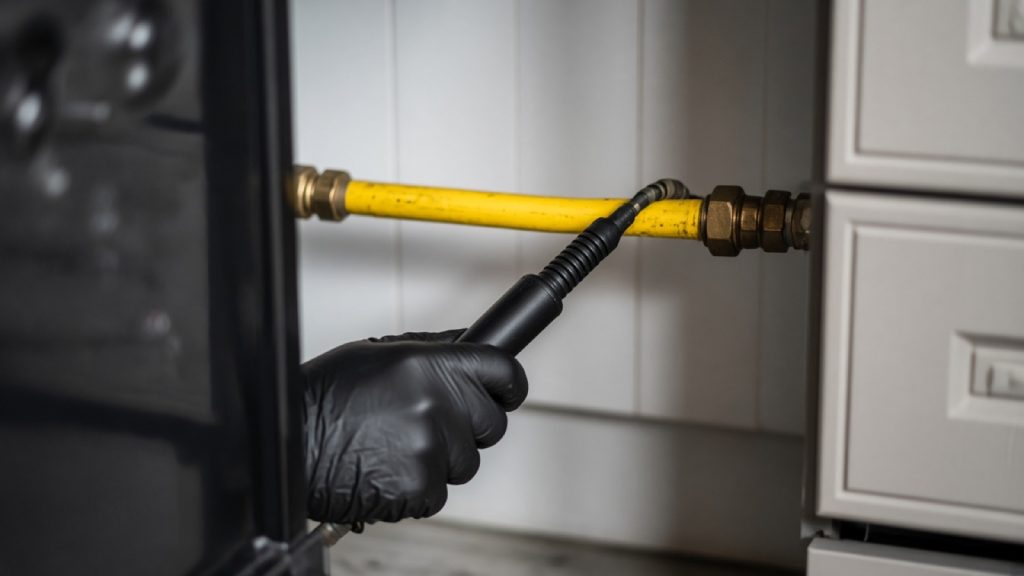
A hand held detector is passed along the pipe route, over the floor, up the wall and across the garden. The reading rises as it approaches the leak and peaks directly over it. That point is marked.
4
You get a written report with the location and photographs. Charlie then talks you through the repair so the pipe is opened at the marked point only.
A trace of hydrogen carried in nitrogen. Hydrogen is the smallest molecule, so it leaves through the tiniest hole, and it rises through soil, screed and plaster to the surface where the detector picks it up.
A hand held sensor that reads the concentration of gas at the surface. The reading is logged along the route, and the peak is the leak. It also confirms there is no gas left in the building.
A gauge on the isolated pipe shows whether it is holding. It proves there is a leak on that run before the tracer gas goes in, and proves the repair afterwards.
A bungalow outside King's Lynn had been isolated by the emergency service after a smell in the garden. The buried run to a garage boiler was charged with tracer gas and the detector peaked over a corroded joint near the wall, so one hole was dug. In a Chatteris new build the pipe ran under the kitchen slab; the gas surfaced at a joint in the screed and the floor was opened at that spot only. In a Victorian house in St Albans the fault was a fitting behind the kitchen units, found with the detector before any cupboard came out. Each pipe was repaired and tested before the supply went back on.
Gas leak detection and repair services from our Suffolk base across Suffolk, Norfolk, Cambridgeshire, Essex, Hertfordshire, Bedfordshire, Buckinghamshire and Greater London, in postcode areas AL, CB, CM, CO, EN, HP, IG, IP, LE, LU, MK, NN, NR, PE, RM, SG, SS and WD.
Short, practical reads written for the problem you have in front of you.
Every gas leak detection visit ends with a written report. It records where the leak was found, the readings along the pipe route, photographs of the marked point and what was recommended. If a floor or wall has to be opened for the repair, the report supports a trace and access claim in the same way as a water leak.
Call 07897 020 680 and we can usually book you in within 24 to 48 hours, with no find, no fee.
Landline 01440 840 772. Email hello@completeleakdetection.co.uk.