You can hear water running
Every tap is off, the washing machine is idle, and you can still hear water somewhere. That sound is the pipe leaking, and the equipment can follow it to the source.

Acoustic listening leak detection
Water leaving a pipe under pressure makes a noise. Charlie listens for it with ground microphones and contact sensors, then marks the spot on the floor or ground so the dig is small.
No find, no fee
Nothing dug up to look
24/7 enquiries
Usually booked within 24 to 48 hours
Tell us what you have noticed and where. We ring you back to talk it through. No find, no fee.
No find, no fee
24/7 enquiries
Non-invasive methods
Reports for insurance claims
Acoustic listening works on pipes that are under pressure. The escaping water hisses or rumbles, and that sound travels along the pipe wall and through the soil, concrete or screed around it. The noise is often too faint to hear with your ear, which is why the equipment matters.
Charlie uses this method most on supply pipes and mains between the meter and the house, on pipes under concrete floors and tarmac, and on heating pipework in walls. It is the first tool out of the van when you can hear water running and nothing is turned on.
Our acoustic water leak detection services cover homes and businesses across East Anglia and into Greater London. You get the leak marked, a written report with the readings, and a plain explanation of what to do next.
Every tap is off, the washing machine is idle, and you can still hear water somewhere. That sound is the pipe leaking, and the equipment can follow it to the source.
Turn off the internal stop tap and watch the meter. If it keeps moving, the leak is on the supply pipe outside, which is where a ground microphone does its best work.
A split on the main or a buried supply pipe shows up as weak pressure at every outlet. Listening along the pipe run narrows it to a short stretch.
A soft, green or soggy patch on the lawn, drive or path with no rain to explain it usually sits near a leaking buried pipe. We listen above it and either side.
1
Charlie checks the meter and stop taps first to confirm water is actually escaping and to work out which pipe run it is on. That stops time being spent listening in the wrong place.
2
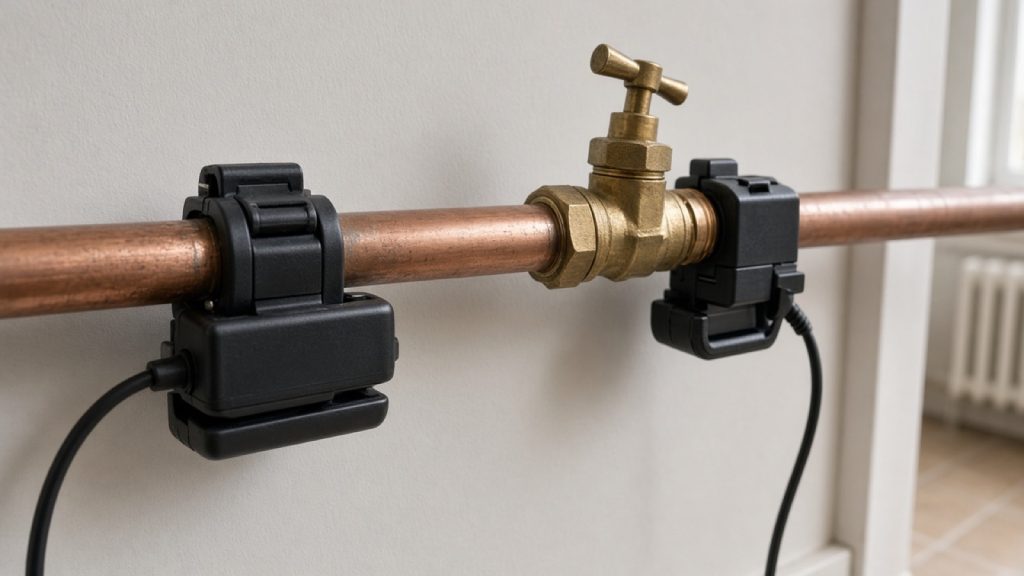
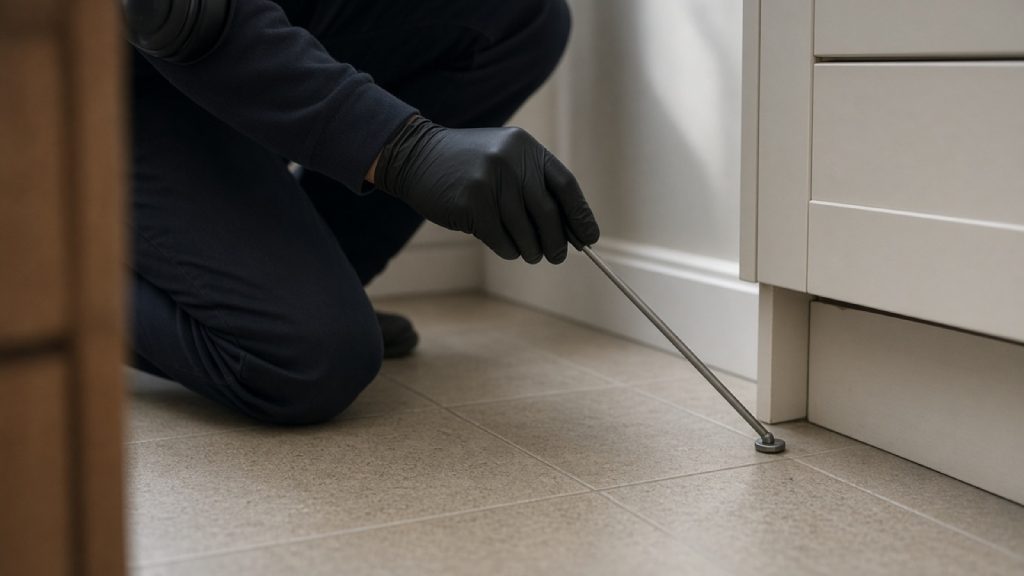
Contact sensors go onto taps, valves and exposed pipe. The ground microphone goes onto the floor, drive or lawn above the buried run, moving a short distance at a time and comparing the noise level at each point.
3
The noise is loudest directly over the leak. Where the run is long, a correlator compares the sound arriving at two sensors to calculate the position. Charlie marks it with paint or tape.
4
You get the location, photos and readings in a written report. If a dig or repair is needed, you know exactly where to open up, and the report supports a trace and access claim.
A sensitive microphone that sits on the surface and amplifies the leak noise coming up through soil, concrete and tarmac. It is the main tool for buried supply pipes and leaks under solid floors.
Sensors that attach to pipework, stop taps and valves to pick up the leak noise travelling along the metal or plastic. Useful for pipes inside walls and for working out which run the leak is on.
Two sensors on the same pipe, some distance apart. The correlator measures the tiny time difference in the leak noise reaching each one and works out where between them the leak sits.
Traffic, pumps and wind all make noise. The equipment filters those frequencies out so the leak stands out, even on a busy road or in a plant room.
Listening equipment earns its keep on supply pipes. In King's Lynn a 1930s semi had a meter that would not stop, and the ground microphone along the front garden put the leak at a joint under the gate, where the pipe had been extended years before. On a farm outside Wisbech a private supply ran 200 metres across a field; the correlator between two contact sensors placed the split within a pace, and the farmer dug one hole. In Southend a terrace with a hissing stop tap had a leak under the hall floor, heard through the tiles and confirmed with tracer gas before a single tile came up.
Acoustic leak detection services from our Suffolk base across Suffolk, Norfolk, Cambridgeshire, Essex, Hertfordshire, Bedfordshire, Buckinghamshire and Greater London. Postcode areas AL, CB, CM, CO, EN, HP, IG, IP, LE, LU, MK, NN, NR, PE, RM, SG, SS and WD.
Short, practical reads written for the problem you have in front of you.
Most home insurance policies include trace and access cover, which pays for finding the leak and for making good what has to be opened up to reach it. Our written report gives the location, the method used, the readings and photographs, laid out so an insurer can see how the leak was found and what the damage is.
Call any time on 07897 020 680 and we can usually book you in within 24 to 48 hours, with no find, no fee.
Landline 01440 840 772. Email hello@completeleakdetection.co.uk.