1
Talk it through on the phone
You describe the symptoms and the age of the house. From that Charlie knows whether he is chasing a heating circuit or a mains leak, and which floors are timber and which solid.

Leak detection in St Albans
Charlie comes with thermal imaging, acoustic listening and tracer gas, and leaves your floorboards and plaster alone until the leak is marked.
No find, no fee
Booked inside 48 hours
Report your insurer accepts
Harpenden and Hatfield covered
Tell us what you have noticed and where. We ring you back to talk it through. No find, no fee.
No find, no fee
24/7 enquiries
Non-invasive methods
Reports for insurance claims
St Albans is a city of old houses. The streets around Clarence Park and Bernards Heath are Victorian and Edwardian, with suspended timber floors, lead and iron pipework patched over decades, and cellars that show damp long before the leak is obvious upstairs. Marshalswick and the post war estates have concrete floors with the heating buried in them.
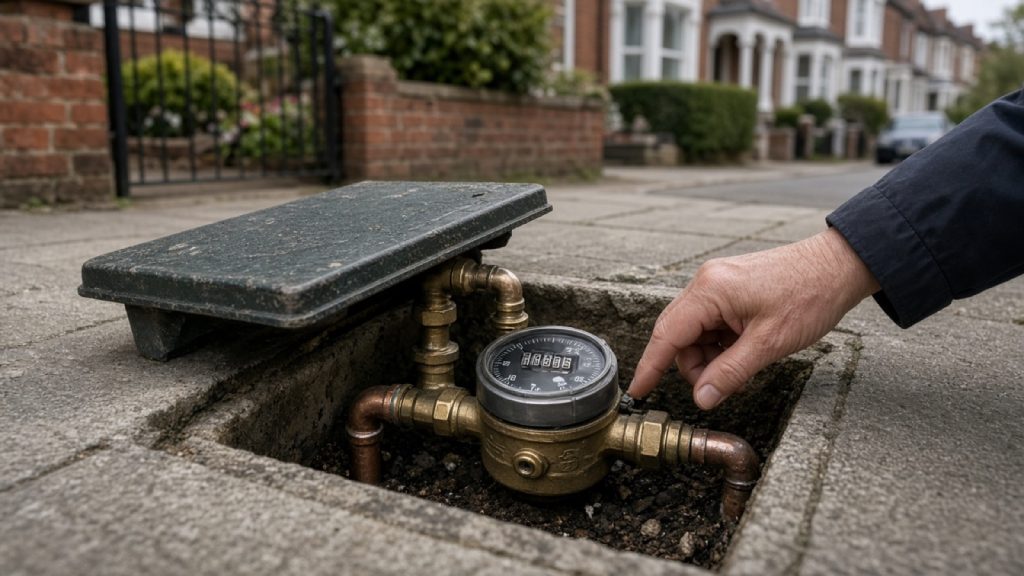
Affinity Water supplies the city, and the supply pipe from the pavement stop tap is yours. Older St Albans houses often have that pipe under a long front path, so a leak on it can run for months and only show as a rising bill. St Albans leak detection is as much about the age of the house as the leak.
1
You describe the symptoms and the age of the house. From that Charlie knows whether he is chasing a heating circuit or a mains leak, and which floors are timber and which solid.
2
A meter test with the stop tap closed and a pressure test on the heating tell him which pipework is losing water. In a much altered house this step matters most.
3
Thermal imaging shows where the pipes actually run, which in a Victorian house is rarely where you expect. Listening or tracer gas then fixes the leak to a few centimetres, marked and photographed.
The camera picks out warm pipe runs behind lath and plaster and under boards, and cold wet areas where mains water has soaked into a floor. It is the fastest way to read a house nobody has a drawing of.
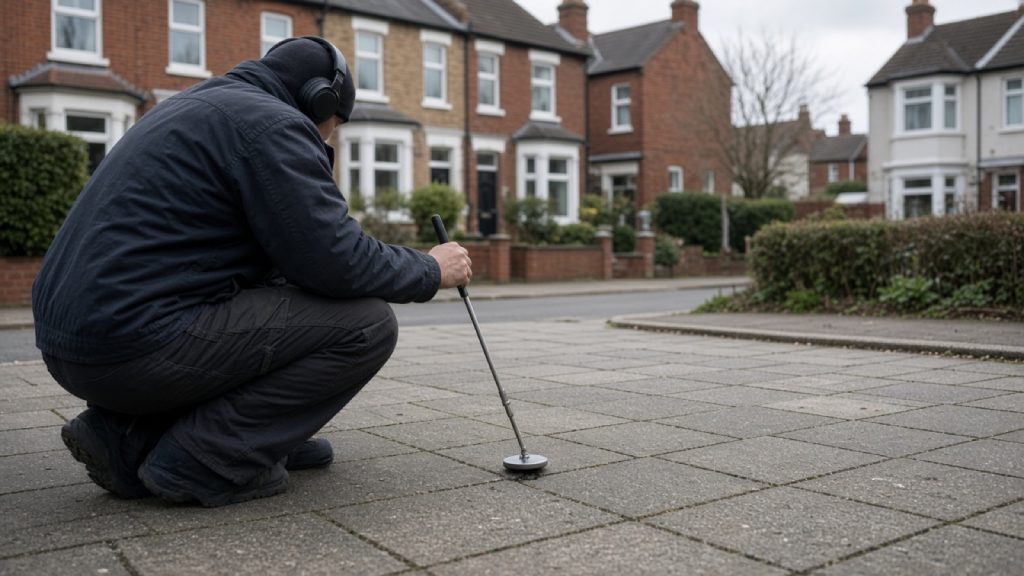
A leak under pressure makes a steady noise. Ground and contact microphones trace that noise along a supply pipe under a path or through a cellar wall to where it is loudest.
For heating circuits and underfloor heating leak detection in St Albans, the system is drained and charged with a safe hydrogen mix. The gas surfaces over the break and a detector finds it, through tiles, screed and parquet.
A Victorian villa near Clarence Park had damp creeping up the cellar wall and a water bill that had doubled. The supply pipe ran under a long front path, and the ground microphone found the leak a few metres from the stop tap, so the path was lifted in one place. In Bernards Heath an Edwardian house with suspended floors had a boiler losing pressure; the camera showed the warm pipe run under the hall and tracer gas marked a joint where the pipework had been altered years ago. Out in Marshalswick a postwar house with heating in the concrete floor had a warm patch in the lounge, and the leak was under the window.
From St Albans the same visit reaches Harpenden to the north, Hatfield to the east and Welwyn Garden City beyond it. Hemel Hempstead is 10 minutes west. Radlett and London Colney are covered on the way, like the rest of our leak detection in Hertfordshire.
Trace and access cover on a home policy pays to locate a leak and to open up the fabric of the building to reach it. Older houses can need more opening up, so the report matters. Ours sets out what was tested, what was found and where, with the images that prove it.
Ring us on 07897 020 680.
Landline 01440 840 772. Email hello@completeleakdetection.co.uk.