
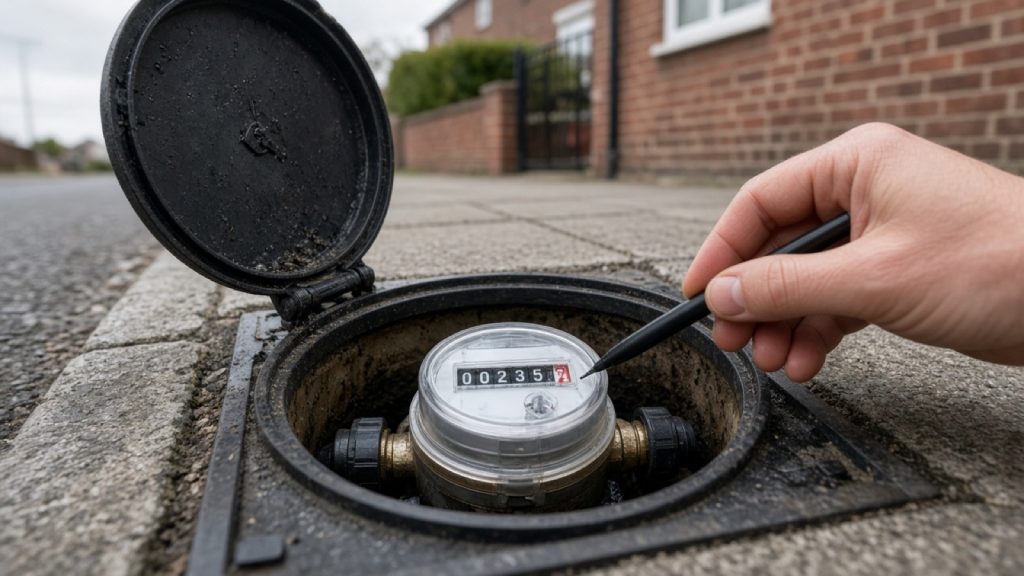
A leak on your supply pipe or inside the house has been running for months, your metered bill has arrived, and the charge is for water that went straight into the ground. The leak is fixed, or about to be, and you want to know whether you have to pay for all of it. Most people only hear about the Thames Water leak allowance, or the equivalent from their own company, after the bill lands.
This article explains what a leak allowance is, which companies in East Anglia and Greater London offer one, what each expects you to do before they will consider it, and why a detection report makes the application easier. We do not quote amounts, time limits or the exact wording of any scheme, because they change and the company's own current terms are the only version that counts.
What a leak allowance is
If you are on a water meter, you are charged for every litre that passes through it, including water that escaped from a leaking pipe on your side of the meter without ever reaching a tap. A leak allowance is the water company's way of adjusting that. Once the leak is repaired, you apply, and the company can reduce the bill to take account of the water lost.
It is a concession, not an entitlement, and every company sets its own conditions. In general terms the leak has to be one you did not cause by neglect, it has to have been repaired promptly once found, you have to show evidence of the repair, and the company normally only allows one claim within a set period. The allowance is applied to the water charge and, with some companies, to the sewerage charge for the water that did not go down the drain.
What the allowance does not do is pay for the repair, pay for finding the leak, or compensate for damage. It is a bill adjustment and nothing more. Those other costs are a matter for your home insurance, which is covered in our trace and access guide.
Which companies in our area offer one
Our coverage runs across East Anglia and Greater London, and the supplier depends on where you live. Anglian Water supplies most of Norfolk, Suffolk and Cambridgeshire, inland Essex and Milton Keynes. Essex and Suffolk Water supplies the Essex coast, Southend and Lowestoft. Cambridge Water supplies Cambridge and the villages around it. Affinity Water supplies Hertfordshire, Luton and Dunstable. Thames Water supplies Greater London and parts of Essex and Hertfordshire.
Each of these companies runs a leak allowance scheme for metered customers. The shape of the scheme is similar everywhere, but the conditions, the paperwork and what counts as evidence are set by each company and are updated from time to time. Check your bill for the supplier name, then find the current leakage allowance page on that company's website before you do anything else.
• Anglian Water: most of Norfolk, Suffolk, Cambridgeshire, inland Essex, Milton Keynes
• Essex and Suffolk Water: the Essex coast, Southend, Lowestoft
• Cambridge Water: Cambridge and nearby villages
• Affinity Water: Hertfordshire, Luton, Dunstable
• Thames Water: Greater London and parts of Essex and Hertfordshire
The Thames Water leak allowance
If you are in Greater London or the parts of Essex and Hertfordshire that Thames Water supplies, the application goes to them. The general pattern is the one described above: the leak is on your supply pipe or your internal plumbing, you have had it repaired, and you apply afterwards with evidence of the repair and your meter readings. Thames Water will look at your usage before and after the repair to work out how much was lost.
Thames Water is also the sewerage company for a wider area than it supplies water to, which includes much of Hertfordshire where Affinity Water supplies the water. If your water supplier is Affinity but your sewerage is Thames, the allowance on the water charge comes from Affinity and any adjustment to the sewerage charge is a separate question. Your bill shows which company charges for what.
The Anglian Water leak allowance
Anglian Water covers the largest part of our area, so it is the scheme most of our customers deal with. If you have had a letter from Anglian Water saying your usage has risen, that letter is the usual starting point, and we have a separate article on what to do when it arrives. The allowance application follows the repair, not the letter.
As with the others, Anglian Water expects the leak to have been fixed, evidence that it was fixed, and meter readings that show usage has returned to normal. If the leak was on the supply pipe between the boundary and the house, it is your pipe to repair, and the company may be able to help with that repair in some circumstances. Ask them before you book a contractor, because the answer affects the paperwork.
Essex and Suffolk Water, Affinity Water and Cambridge Water
The Essex and Suffolk Water leak allowance applies if you are on the Essex coast, in Southend or around Lowestoft. The Affinity Water leak allowance applies across Hertfordshire and in Luton and Dunstable. Cambridge Water runs its own scheme for Cambridge and the surrounding villages. All three follow the same general shape: repair first, apply after, evidence and readings with the application.
The differences are in the detail, which is why we do not set it out here. One company may ask for an invoice from the plumber, another may accept a photograph of the repair with a date. One may apply the allowance to the whole period of the leak, another only to part of it. The company's own page tells you exactly what it wants, and ringing them before you apply avoids a refused first attempt.
How a water leak allowance claim works
The order matters. First, find the leak. Second, repair it. Third, take a meter reading on the day of the repair and keep taking them for a few weeks so you can show usage has dropped back. Fourth, gather the evidence: the repair invoice or a dated photograph, the detection report if you had one, and the readings. Fifth, contact the company and apply, usually through a form on their website or by phone.
A water leak allowance claim is normally refused for one of a few reasons. The leak was not repaired, or not repaired promptly. There is no evidence of the repair. The usage has not come down, which suggests either the repair did not work or there is a second leak. Or a claim has already been made within the set period. Each of those is avoidable if you keep the paperwork and do the readings.
If you are still arguing with the company about the bill, keep paying the normal part and say so in writing. Ask for the account to be put on hold for the disputed part while the application is considered. If the application is refused and you think that is wrong, the company has a complaints process, and beyond that there is an independent body for water customers.
• Find the leak and get it repaired
• Meter reading on the day of repair, then weekly for a few weeks
• Keep the repair invoice or a dated photograph of the work
• Keep the detection report and any letter from the company
• Apply through the company's own form or by phone
Why a detection report helps
The companies want to see that the leak was real, that it was on your side of the meter, that it was found and fixed promptly, and that the amount of water lost is explained. A written detection report does most of that in one document. It records the date, the method used, the location of the leak, photographs of the evidence, and the meter test readings that proved water was escaping.
It also shows the timeline. If the report is dated the week after the high usage letter and the repair invoice is dated a few days after that, the company can see you acted as soon as you knew. That is the promptness condition met in writing. Without it, you are relying on your own account of when you noticed and what you did.
The report has a second use. The same document supports a trace and access claim on your home insurance for the cost of finding the leak and making good what was opened to reach it. One visit, one report, two applications.
Finding the leak so you can apply
None of this works until the leak is found and fixed, and a supply pipe leak under a garden or drive leaves nothing to see. The meter test proves it exists, the stop tap test shows it is outside, and then the point on the pipe has to be located before anyone digs. We trace the pipe route and listen along it with a ground microphone while the pipe is under pressure, and mark the spot where the sound peaks.
The repair is then a small excavation in the right place rather than a trench along the whole run, and the report that comes with it is the evidence for both the water company and the insurer. We cover every company area listed above, work no find, no fee, and can usually book you in within 24 to 48 hours. If a letter about high usage has arrived, ring us before the next bill does.