1
Attribute the loss
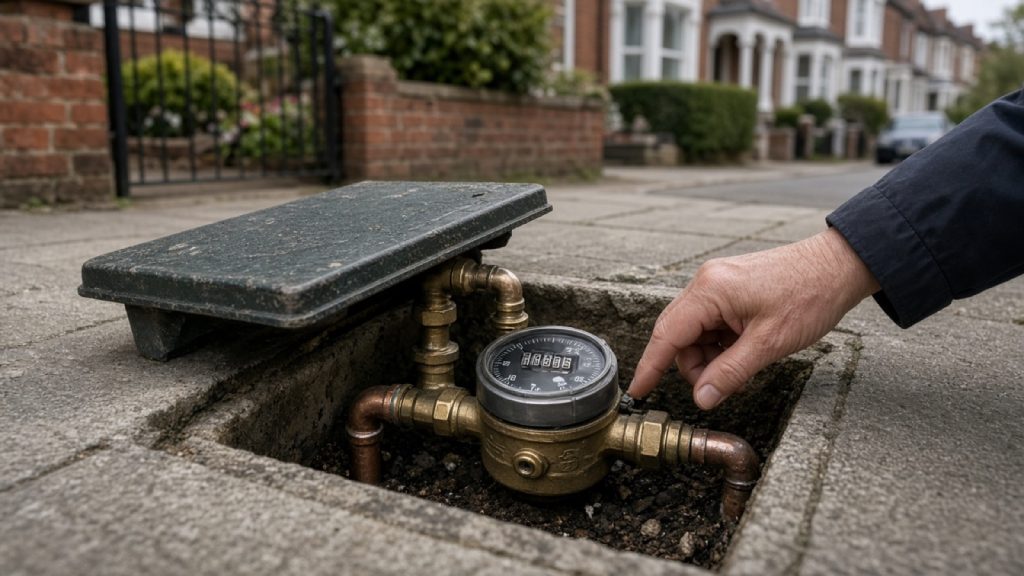
Charlie isolates supplies one at a time and watches the meters, and pressure tests each heating circuit he can reach. The property and the system losing water are identified first.

Leak detection in Waltham Cross
Waltham Cross is tightly built, and a leak in one home is often a problem for the next. Charlie finds the pipe and proves whose it is.
No find, no fee
Shared pipes handled
Proof for the agent
Tell us what you have noticed and where. We ring you back to talk it through. No find, no fee.
No find, no fee
24/7 enquiries
Non-invasive methods
Reports for insurance claims
Waltham Cross sits at the bottom corner of Hertfordshire, pressed between the A10, the M25 and the Lee Valley. The streets off the High Street and Eleanor Cross Road are mostly Victorian and interwar terraces, with flats and maisonettes added through the postwar decades. Houses are close and pipes cross boundaries.
That is what shapes Waltham Cross leak detection. In a terrace, a supply pipe may feed two homes before it splits. In a block, a riser serves a whole stack of flats. Affinity Water supplies the town, and the pipe inside the boundary is private, which for flats often means shared.
1
Charlie isolates supplies one at a time and watches the meters, and pressure tests each heating circuit he can reach. The property and the system losing water are identified first.
2
The thermal camera goes over the affected floor and the party walls and ceilings around it. In a terrace it shows pipes under the boards and damp from next door. In a flat it shows where the water travelled.
3
Acoustic listening or tracer gas pins the leak to a few centimetres. We mark it and photograph it, then write a report naming the property, the pipe and the location.
Party walls and shared ceilings are where the camera earns its place in Waltham Cross. It shows a damp patch creeping through from a neighbour's side, or a warm heating run under a floor.
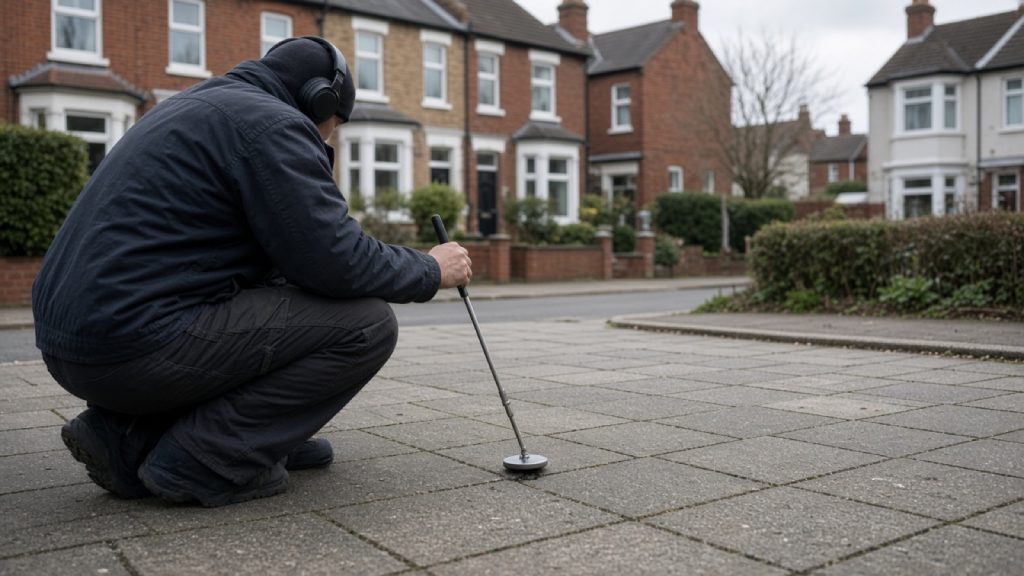
Short front gardens and paved forecourts mean the supply pipe is never far from the surface. The ground microphone follows it from the stopcock to the wall and marks the loudest point.
Where a heating pipe sits in a solid floor or a riser is boxed into a shared duct, we drain the circuit and introduce a hydrogen and nitrogen mix. The gas escapes at the leak for the detector.
In a terrace near the town centre two neighbours each thought the other's pipe was leaking into the party wall. We isolated each supply in turn and watched the meters, and the thermal camera showed the wet pipe was on one side only, so the right insurer paid. In a block of flats a ground floor ceiling was dripping and the managing agent needed to know whose pipe it was; isolating the riser and each flat put it on the bathroom waste two floors up. A shop with flats above had water in the stockroom after hours, traced to a heating pipe in the floor of the flat above.
Cheshunt is the next town up the A10 and Broxbourne and Hoddesdon follow it, so all three share the same leak detection Hertfordshire run. Potters Bar is a short drive west along the M25, and Enfield is Greater London.
With shared pipework the first question an insurer asks is whose leak it was. Our report answers it: the isolation tests, the meter readings, the thermal images and photographs, and a marked location tied to one property and one pipe. That lets the right policy pay without a dispute between neighbours.
Call us on 07897 020 680: house, flat or shop.
Landline 01440 840 772. Email hello@completeleakdetection.co.uk.