1
Phone call to narrow it down
You describe the symptoms. Damp patch, pressure drop, high bill or a wet garden each point to a different pipe. Charlie picks the equipment and gives you a time.

Leak detection in Colchester
Colchester is one of the places Charlie visits most. Water and heating leaks are located with non-invasive equipment, marked and reported.
No find, no fee
Most visits within 48 hours
Report accepted by insurers
Tell us what you have noticed and where. We ring you back to talk it through. No find, no fee.
No find, no fee
24/7 enquiries
Non-invasive methods
Reports for insurance claims
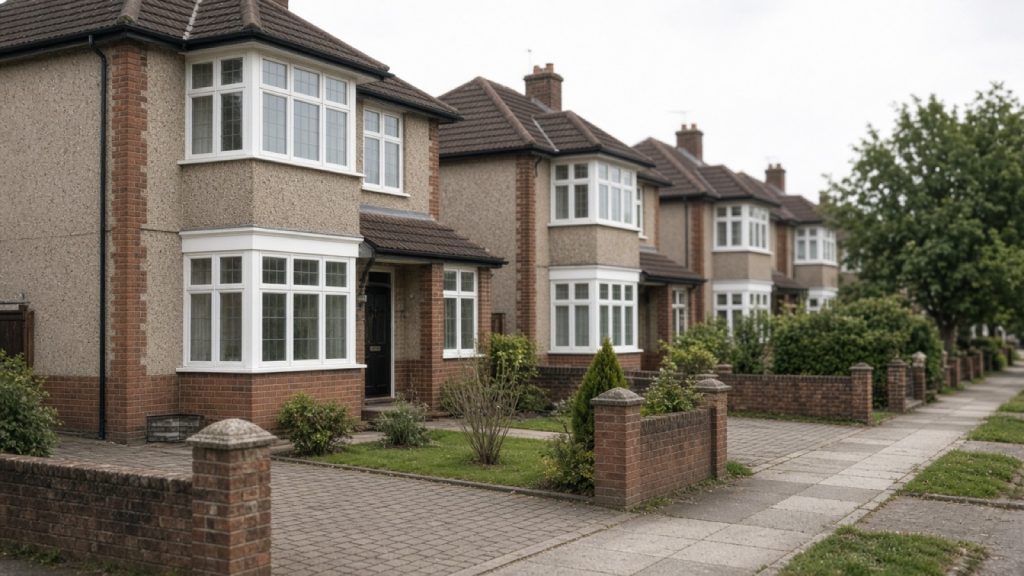
The city has every kind of house we work on. Victorian terraces around the station and off Maldon Road still run on lead supply pipes. Lexden and Braiswick have large Edwardian houses with long pipe runs. Greenstead and Berechurch are post war, and Stanway is new build with underfloor heating.
Colchester is supplied by Anglian Water. A rising bill or a meter that creeps with every tap closed is the earliest warning. Out towards Nayland, Bures and Marks Tey, long private supply pipes across fields are a common source, and finding a break on 100 metres of pipe without a microphone means digging it all.
1
You describe the symptoms. Damp patch, pressure drop, high bill or a wet garden each point to a different pipe. Charlie picks the equipment and gives you a time.
2
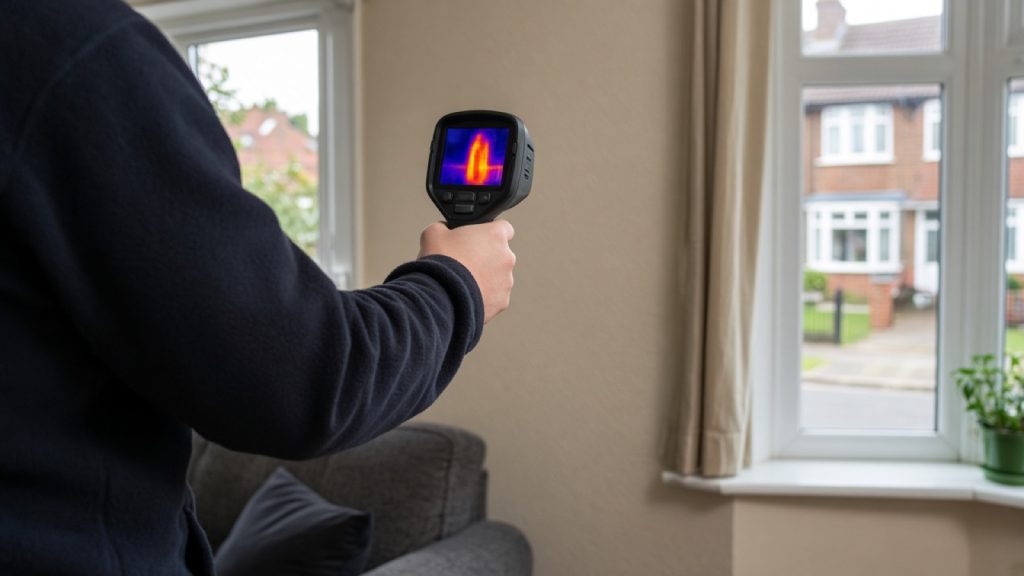
He checks the meter and the heating pressure, then scans walls and floors with the thermal camera. Within an hour he usually knows whether it is supply, heating or waste.
3
Acoustic listening on a pressurised main, tracer gas on a heating loop. The leak is marked to within a few inches and photographed for your insurer or plumber.
In a Victorian terrace with lath and plaster, the camera finds the cold patch a leaking pipe leaves inside the wall. In a new build it maps the underfloor loops and the failed section.
A ground microphone and a correlator listen for the hiss of a pressurised leak. On a rural supply pipe outside Colchester this finds a break under a field without a trench.
The heating system is drained and filled with a hydrogen and nitrogen mix. Gas leaves at the fault and rises through screed, tile or carpet to a sensor at the surface.
A Victorian terrace near the station had a meter that kept moving with every tap off. The supply pipe was lead, so the sound was soft, and the correlator put the break under the front path by the step. One flag came up. In Lexden, a large Edwardian house had a cold patch on an upstairs landing with no obvious source. Thermal imaging traced it to a heating pipe under the boards feeding a radiator two rooms away. On a new build in Stanway the underfloor heating would not hold pressure. We mapped the loops with the camera, found the cool section and confirmed it with tracer gas, so the screed was opened in one place.
We cover Stanway, Highwoods, Mile End, Wivenhoe, West Mersea, Tiptree, Kelvedon, Marks Tey, Nayland and Wormingford from the same trip. The whole CO postcode is routine, so a village is no trouble.
Trace and access is the part of a home policy that covers finding a leak and opening up to reach it. Our report describes the method, shows the thermal and photographic evidence and gives the leak position on a simple plan. Loss adjusters work from it directly, with no second survey.
Call us on 07897 020 680 with your postcode.
Landline 01440 840 772. Email hello@completeleakdetection.co.uk.